
With the summer temperatures on the rise, many horse owners wonder how hot is too hot to work your pony or miniature horse? Horse events such as horse shows, playdays, trail drives or walks, and general training are in full swing during the summer for most people. Read on to learn how to keep your horse happy, healthy and not overheated on the long, hot summer days.
Why Hot Weather Poses a Risk
Horses regulate body temperature primarily through sweating. However, when the ambient temperature and/or humidity are both high, sweat evaporates more slowly. This limits the horse’s ability to cool down, and internal body heat can build up rapidly. Without proper precautions, this can lead to serious, potentially life-threatening consequences.
Miniature Horses and Ponies are Different
While mini horses and ponies have the same mechanisms for heat dissipation, their overall smaller size can affect how efficiently they can dissipate heat. Very Small Equines (VSE) as well as ponies are more prone to be overweight. Overweight horses, no matter the size, have a harder time working in the heat and have increased risk for heat related complications such as heat exhaustion. Lastly, miniature horses and ponies tend to have a thicker coat that doesn’t shed as quickly as their larger counterparts. Take into consideration your horse's coat and consider body clipping to keep them comfortable regardless of their workload.
Why Hot Weather Poses a Risk
Horses regulate body temperature primarily through sweating. However, when the ambient temperature and/or humidity are both high, sweat evaporates more slowly. This limits the horse’s ability to cool down, and internal body heat can build up rapidly. Without proper precautions, this can lead to serious, potentially life-threatening consequences.
Miniature Horses and Ponies are Different
While mini horses and ponies have the same mechanisms for heat dissipation, their overall smaller size can affect how efficiently they can dissipate heat. Very Small Equines (VSE) as well as ponies are more prone to be overweight. Overweight horses, no matter the size, have a harder time working in the heat and have increased risk for heat related complications such as heat exhaustion. Lastly, miniature horses and ponies tend to have a thicker coat that doesn’t shed as quickly as their larger counterparts. Take into consideration your horse's coat and consider body clipping to keep them comfortable regardless of their workload.
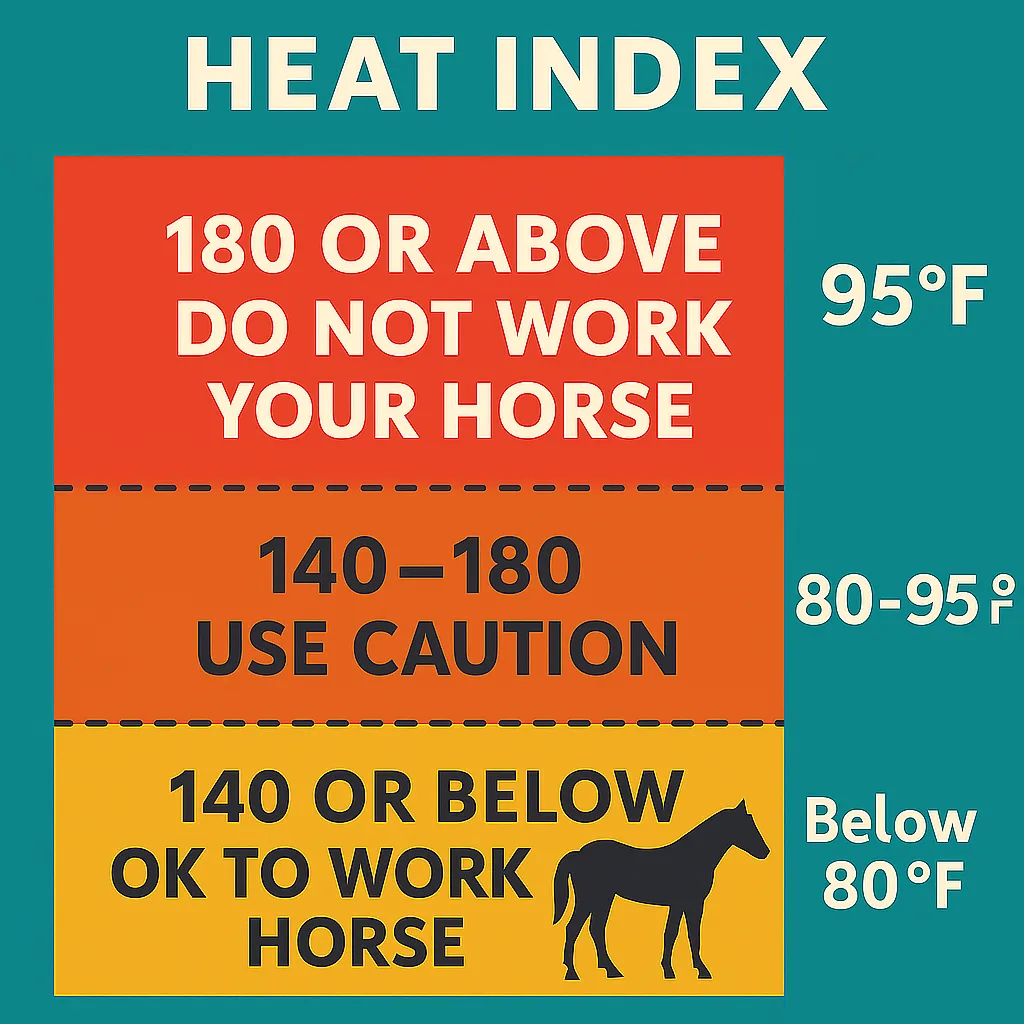
Heat Index Guidelines
Utilize the Heat Index or Feels Like Temperature
The best tool for deciding whether it’s too hot to work or participate in an equine activity is the heat index. Just knowing the temperature is not enough. The heat index takes both the temperature and humidity into account. Higher humidity means it will be harder for sweat to evaporate (for both horse and human) and limit the cooling effect. The feels like temperature combines temperature, humidity, cloud cover, wind, and sun
The best tool for deciding whether it’s too hot to work or participate in an equine activity is the heat index. Just knowing the temperature is not enough. The heat index takes both the temperature and humidity into account. Higher humidity means it will be harder for sweat to evaporate (for both horse and human) and limit the cooling effect. The feels like temperature combines temperature, humidity, cloud cover, wind, and sun
intensity to come up with the feels like temperature. Most weather apps have feels like or heat index information. Mad Barn has a great equine heat index tool that is free to use to determine the heat index for your specific location.
Key Precautions for Exercising in the Heat
If you have decided that it is safe for you and your horse to work in the heat or if it is unavoidable keep the following precautions in mind.
Heat Distress in Horses - Know the SIgns
Recognizing early signs of heat stress can help you take action before the situation worsens. Watch for the following symptoms during or after exercise:
Every horse handles heat differently. Age, fitness level, coat color, hydration status, and breed can all affect heat tolerance. Monitor your miniature horse or pony closely and err on the side of caution during summer workouts. When in doubt, skip the workout or activity and opt for a light hand-walk, grooming session or hose down instead. Your horse’s health and safety always come first.
Disclaimer: It is always advisable to speak with your veterinarian about your horse’s unique situation. This information is to be considered a guideline of where to begin. It is no way a substitute for medical advice from your veterinarian.
Key Precautions for Exercising in the Heat
If you have decided that it is safe for you and your horse to work in the heat or if it is unavoidable keep the following precautions in mind.
- Time Activities and Workouts Wisely
Work your horse early in the morning or late in the evening when temperatures are cooler and the sun is less intense. Avoid the peak heat hours of 11 a.m. to 4 p.m. - Adjust Intensity and Duration
Scale back exercise intensity during heatwaves. Even a fit horse can struggle with moderate work in extreme heat. Consider shorter sessions or walk-only drives. - Provide Ample Water
Make sure fresh, clean water is available before, during and after exercise. Contrary to old myths, it’s safe and essential to allow a hot horse to drink. Consider adding salt and/or electrolytes to their feed or an extra bucket of water. - Cool Down Properly
After exercise, continuously hose your horse down with cool (not ice-cold) water until their temperature approaches normal. Resist the urge to use a sweat scraper to remove the excess water. The latest research shows that continual contact with water is the best for heat conduction and more effective than evaporation in cooling down a horse.. - Shade and Ventilation
Always cool out in a shaded, well-ventilated area. Even if you have to get creative like using a pop up cover. Anything safe is better than nothing. If you are returning your horse to a stall after work and a proper cool down, be sure there is good airflow and consider using fans.
Heat Distress in Horses - Know the SIgns
Recognizing early signs of heat stress can help you take action before the situation worsens. Watch for the following symptoms during or after exercise:
- Excessive or no sweating
Paradoxically, both heavy sweating and a sudden lack of sweat can signal distress. Anhidrosis (the inability to sweat) is particularly dangerous. - Rapid breathing or panting
A horse’s respiratory rate should return to normal (8–16 breaths per minute) within 10–15 minutes post-exercise. Prolonged or labored breathing is a red flag. - Elevated heart rate
A resting heart rate for a horse is 28–44 beats per minute. If it remains high well after stopping exercise, the horse may be overheating. - Lethargy or weakness
If your horse seems unusually dull, unsteady, or reluctant to move, stop all activity immediately and begin cooling measures. - Dark or tacky gums
Check your horse’s gum color—it should be moist and pink. Dark red or dry, sticky gums are signs of dehydration or shock.
Every horse handles heat differently. Age, fitness level, coat color, hydration status, and breed can all affect heat tolerance. Monitor your miniature horse or pony closely and err on the side of caution during summer workouts. When in doubt, skip the workout or activity and opt for a light hand-walk, grooming session or hose down instead. Your horse’s health and safety always come first.
Disclaimer: It is always advisable to speak with your veterinarian about your horse’s unique situation. This information is to be considered a guideline of where to begin. It is no way a substitute for medical advice from your veterinarian.